How Much It Really Costs to Remove a Large Tree
Wondering what it really costs to remove a large tree? We walk through real-world price ranges, key cost factors, and what homeowners should expect.
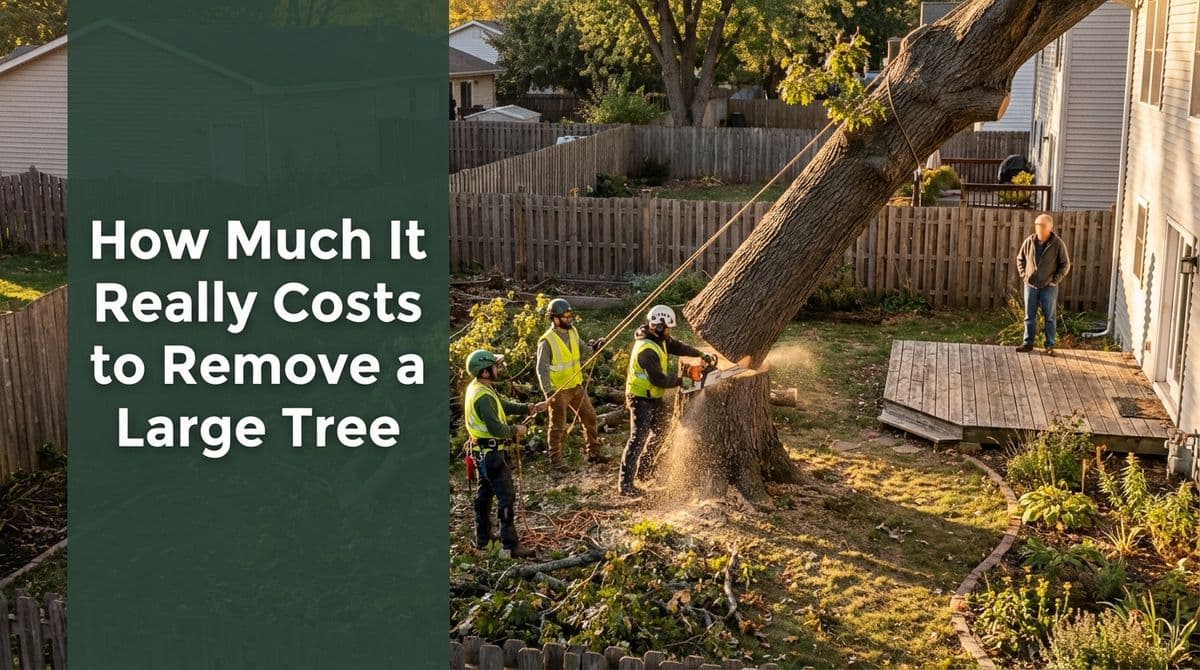
What One Big Lemon Tree Taught Us About Pricing
We recently got a call from a homeowner — let’s call her Sarah — who had a large lemon tree on the side of her house. She and her husband were planning an addition, and this tree was smack in the way. It wasn’t a small ornamental; it was a mature, side-yard giant, and she wanted it completely gone, stump and all.
As we talked, we pulled up her property on Google Maps, confirmed the tree’s location (side of the house, furthest from the road), and walked through what she needed: full removal plus stump grinding. Based on the size, access, and timing (busy spring season), we gave her a ballpark estimate in the $4,500–$4,800 range.
Her reaction is the same one many homeowners have: “Wow, I didn’t realize it could cost that much. What exactly goes into that price?” Let’s break that down so you know what to expect if you’re thinking about removing a large tree.
Typical Cost Range for Large Tree Removal
Every property is different, but for a truly large tree (often 50–80+ feet tall) that needs full removal and stump grinding, most homeowners can expect a price somewhere in these ranges:
- Large tree removal only: roughly $1,500–$3,500+
- Large tree removal + stump grinding: roughly $2,000–$5,000+
Sarah’s estimate landed on the higher end because of a mix of factors: tree size, side-yard location, stump grinding, and peak-season scheduling. Your price could be lower or higher depending on your situation — here’s why.
Key Factors That Affect Large Tree Removal Pricing
1. Tree Size and Species
The biggest driver of cost is simply how big and heavy the tree is. A mature lemon tree like Sarah’s has a large canopy and substantial trunk, which means more labor, more equipment, and more debris to haul away.
Different species also vary in density and structure. A dense hardwood can be more time-consuming to cut and heavier to move than a softer species. More weight often means more trips to the dump or chipper, which adds to the cost.
2. Location and Access
Where the tree sits on your property matters almost as much as its size. We asked Sarah whether her tree was in the front, back, or side yard, and confirmed it was on the side of the house, furthest from the road. That tells us a few important things:
- Equipment access: Can we get trucks, chipper, or a mini skid-steer close to the tree, or do we have to carry everything by hand?
- Drop zone: Is there room to safely lower branches, or do we need to rig and rope down every piece?
- Obstacles: Nearby fences, sheds, power lines, and the house itself can all increase complexity.
Trees that are easy to reach with clear space around them cost less to remove than trees tucked between buildings, decks, or property lines.
3. Structures, Utilities, and Risk
Any time a tree is close to a house, garage, driveway, or power line, the risk — and the careful planning — go way up. Crews may need:
- Additional climbers or ground crew
- Specialized rigging to lower branches piece by piece
- Protective plywood or barriers to shield roofs, siding, or landscaping
The more delicate the surroundings, the more labor and time are required to keep everything (and everyone) safe, and that’s reflected in the price.
4. Stump Grinding vs. Leaving the Stump
Sarah specifically asked us to grind the stump down to ground level so it wouldn’t interfere with her future home addition. That’s a common request, but it’s a separate line item from the tree removal itself.
Stump grinding prices depend on:
- Stump diameter and root flare
- How deep we need to grind (shallow cosmetic vs. construction depth)
- Access for the grinder (can the machine reach it?)
Including stump grinding can easily add a few hundred dollars or more, especially for very large stumps or multiple stumps.
5. Season and Scheduling
When we spoke with Sarah, we mentioned that spring is a high-demand season. After winter storms and before summer heat, a lot of homeowners decide it’s time to deal with their trees.
During peak times, prices can be higher simply because crews are fully booked and overtime is more common. If your schedule is flexible, you may save money by planning your removal for a slower season.
Regional Price Differences and Permits
How Your Area Affects Cost
Tree removal prices aren’t the same everywhere. Labor rates, dump fees, equipment costs, and insurance requirements vary by region. A large tree removal in a small town might cost less than the same job in a dense urban area with higher operating costs.
In some neighborhoods, access is tight, streets are narrow, and parking is limited, which can add setup time and complexity — all of that can nudge your price upward.
Permits and Local Rules
Depending on where you live, you may need a tree removal permit, especially for large or protected species. Some cities also have rules about:
- How close a tree can be to property lines
- Removing trees over a certain trunk diameter
- Replacing removed trees with new plantings
Permit fees are usually modest, but if they’re required, they’re part of your overall project cost. A reputable tree service will help you understand what’s needed in your area before work begins.
How to Get an Accurate Estimate
Photos, Site Visits, and Clear Questions
With Sarah, we started by looking at her property on Google Maps, then asked her to text us photos of the tree in case the satellite image was outdated. That combination gives us a much clearer picture before we ever arrive on site.
To get a solid estimate for yourself, here’s what helps:
- Photos of the whole tree from different angles
- Close-up shots of the base and any problem areas
- A note about what’s nearby: house, fence, power lines, driveway, etc.
- Whether you want stump grinding, log removal, or wood left for firewood
For complex or high-risk jobs, we’ll usually follow up with an on-site visit to finalize the quote.
Comparing Multiple Quotes
If you’re collecting several estimates, don’t just compare the bottom line. Ask each company:
- Are you licensed and insured for tree work?
- What exactly is included — cleanup, hauling, stump grinding?
- What equipment will you use for a tree this size?
- How will you protect my house, yard, and landscaping?
The cheapest quote isn’t always the best value if it cuts corners on safety, insurance, or cleanup.
Why DIY Large Tree Removal Is Risky
We occasionally talk to homeowners who are tempted to rent a chainsaw and tackle a big tree themselves to “save money.” For small shrubs or very small trees, DIY can sometimes be reasonable. But for large trees near a home or power lines, it’s a very different story.
Large tree removal involves:
- Working at height with heavy tools
- Managing the weight and swing of large branches
- Protecting roofs, windows, vehicles, and neighboring properties
- Handling unexpected defects inside the tree (rot, hollows, cracks)
One misjudged cut can cause thousands of dollars in damage or a serious injury. The cost of professional removal almost always outweighs the financial and safety risks of a DIY attempt.
How to Prepare Your Property for Tree Removal Day
Once you approve the estimate and schedule the work, a little preparation makes the day go smoother and can help protect your property:
- Clear the work area: Move vehicles, outdoor furniture, grills, and toys away from the tree and access paths.
- Secure pets and kids: Keep them indoors or at a safe distance while crews are working.
- Discuss access: Let us know if gates are locked, neighbors need notice, or special arrangements are needed.
- Confirm what stays/goes: Decide whether you want any wood left behind or everything hauled away.
Good communication up front helps ensure there are no surprises for you or the crew.
What You Should Expect as a Homeowner
When you hire a professional for large tree removal, you should expect:
- A clear written estimate outlining what’s included
- Proof of insurance and, if required, permits in place
- Respect for your property, with cleanup after the job
- Honest discussion of risks, options, and potential add-ons (like stump grinding)
With Sarah, our goal wasn’t just to throw out a number — it was to explain why the estimate landed where it did, and what she’d be getting for that investment as she planned her home addition.
If you’re staring at a large tree that’s in the way of your next project, or you’re worried about safety, we’re always happy to talk through your specific situation, review photos, and give you a realistic idea of what removal will cost — before you commit to anything.