How to Prune Peach & Apricot Trees to Prevent Breakage
Learn how we helped a homeowner prune and care for mature peach and apricot trees so they stay shorter, stronger, and don’t snap under heavy fruit loads.
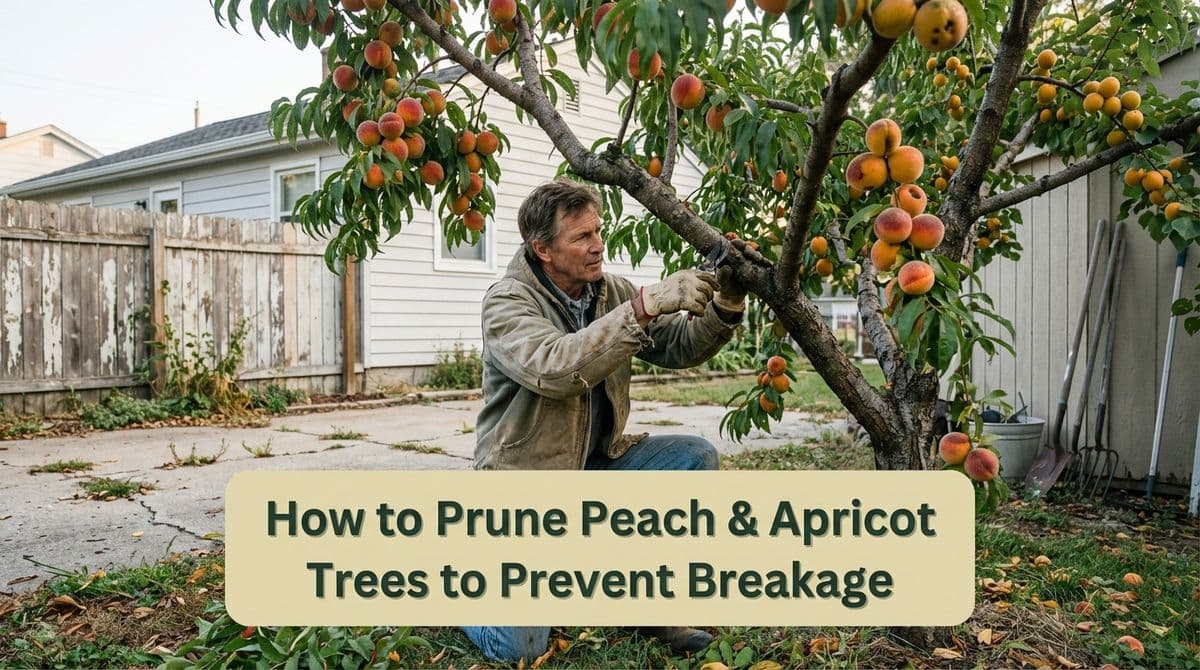
Helping a Customer Protect Their Peach and Apricot Trees
We recently got a call from a customer — let’s call him Gary — who was really frustrated with his fruit trees. He has an older apricot tree and a smaller peach tree that he loves, but the apricot had already lost a few big branches a couple of years ago when it was loaded with fruit. Even though he’d tried thinning the fruit himself, heavy crops still caused damage, and now the tree was getting too tall for him to manage safely.
His younger peach tree, as he put it, had been “misbehaving lately” — lots of growth shooting straight up, and he wasn’t sure what to prune without hurting future harvests. He mostly wanted to know: How do I prune and care for these trees so they don’t break under heavy fruit loads?
We set up a visit to take a look, but the questions Gary asked are ones we hear from homeowners all the time. So I thought I’d walk through the same advice we gave him, step by step.
Why Mature Peach and Apricot Trees Break Under Heavy Fruit Loads
When we first see a tree like Gary’s apricot, the damage is usually a combination of a few issues working together:
- Weak branch angles – Branches that come off the trunk at sharp V angles are more likely to split than wide, U-shaped angles.
- Overextended limbs – Long, unpruned branches act like levers; add a full crop of fruit plus a windstorm, and something has to give.
- Too much height – When trees get too tall, homeowners can’t safely thin fruit or prune the top, so weight and wind stress build up year after year.
- Catch-up pruning – Skipping several years and then doing a heavy prune all at once can leave long, weak stubs and a flush of brittle, upright shoots.
The goal with mature peach and apricot trees is to build a strong, low, open structure that can carry fruit weight without snapping — and that you can safely reach from the ground or a short ladder.
Best Time of Year to Prune Peach and Apricot Trees
One of Gary’s first questions was, “Is there a best season to do this so I don’t hurt the tree?” For peaches and apricots, timing matters:
- Late winter to early spring (just before bud break) is ideal in many areas. You can see the structure clearly, and pruning then encourages strong new fruiting wood.
- Avoid heavy pruning in mid-summer heat, which can stress the tree and expose previously shaded limbs to sunburn.
- Skip major cuts in late fall; you don’t want to stimulate new growth that will be damaged by winter cold.
We often combine structural pruning in late winter with light summer touch-ups for water sprouts (those straight-up shoots) to keep trees in shape.
Shaping the Tree: Lower, Stronger, and More Open
With Gary, we walked around his apricot and talked through the steps. Even if you’re doing this yourself, think in this order rather than just “shortening everything.”
1. Start with safety and deadwood
- Remove dead, diseased, or broken branches first — cut back to healthy wood just outside the branch collar (the slightly swollen area where a branch meets another branch or trunk).
- Take out crossing or rubbing limbs that will wound each other over time.
This alone often reduces weight and improves air flow, which helps with disease.
2. Bring the height down carefully
Gary’s apricot was simply too tall for him to manage. Rather than “topping” (which we never recommend), we used drop-crotch cuts:
- Follow an overly tall limb back to a strong, outward-facing side branch at least 1/3 the diameter of the limb you’re cutting.
- Cut just above that side branch so it becomes the new leader.
- Aim to lower the overall canopy over 2–3 pruning seasons, not all at once, to avoid shocking the tree.
The result is a shorter, more compact tree that still looks natural and keeps plenty of fruiting wood.
3. Open the interior for light and strength
Peaches and apricots produce best on younger wood, which needs good sunlight. For Gary, we focused on creating an open, bowl-like center:
- Favor 3–5 main scaffold branches that come off the trunk at wide angles and are spaced around the tree.
- Remove or shorten steep, upright shoots in the middle that shade the interior.
- Thin out dense clusters so fruiting branches are spaced and not all stacked on top of each other.
This open shape lets light and air reach the fruiting wood, reducing disease and encouraging strong branch development.
How to Thin Fruit So Branches Don’t Snap
Gary had tried thinning his apricots but still ended up with broken limbs, which told us two things: the structure needed work, and the thinning needed to be more aggressive.
- Start thinning when fruits are about the size of a marble to a nickel.
- On peaches and apricots, leave fruit about 4–6 inches apart on the branch.
- Keep the largest, healthiest-looking fruits and remove the rest by hand — don’t yank; twist gently or use small pruners.
- Pay special attention to long, flexible limbs. If they’re bowing heavily under weight, remove more fruit or consider shortening that limb next pruning season.
It feels harsh at first, but proper thinning usually means larger, better-quality fruit and far fewer broken branches.
Caring for “Misbehaving” Young Trees
Gary’s younger peach tree was shooting up with lots of vertical growth. That’s common in younger trees and in trees that have been pruned hard in the past.
Here’s what we recommended:
- Each year, select a few well-spaced scaffold branches and remove competing branches that are too steep or too low.
- Prune back last year’s growth by about one-third to encourage strong, fruiting side shoots.
- Remove water sprouts (those pencil-thin, straight-up shoots) during the growing season while they’re small and easy to cut.
Shaping young trees correctly now prevents the same breakage problems Gary saw in his older apricot.
When to Call a Professional for Your Fruit Trees
As we told Gary, there’s a lot a homeowner can do, but there are times it’s smart to bring in help, especially when:
- The tree is too tall to reach safely with a short ladder.
- You see existing large cracks or partially broken limbs.
- The tree hasn’t been pruned properly in many years and needs structural correction.
- You’re unsure which branches to keep to maintain good fruit production.
With Gary’s trees, we set up a plan to gradually lower and strengthen the apricot over a few seasons, shape the younger peach correctly, and thin the dense shrub on his property. The goal isn’t just a prettier tree — it’s a safer, stronger tree that can carry heavy crops for many years.
If you’re looking at your own peach or apricot tree and worrying about heavy fruit loads, start with some careful structural pruning and fruit thinning — and if the job looks bigger than your ladder or your comfort level, we’re always happy to take a look and help you build a plan.